
Interviewees:
Demei Li, Professor of Beijing University of Agriculture
Shuai Peng , Winemaker ofDomaine Des Aromes;Lecturer of Gansu Agricultural University
Jack Zhang, Founder of No & Low
Over the past two years, non-alcoholic and low-alcohol wine has become a major trend in the global consumer market. Rising health awareness and changing drinking occasions have made consumers increasingly cautious about alcohol intake, driving corresponding growth in sales of these products.
On the surface, this seems like a business with guaranteed upside: it meets health-conscious demands, preserves the ritual and sophistication associated with wine, and avoids the physical burden brought by alcohol.
But in the Chinese market, the challenges facing non-alcoholic wine are far more complex than simply whether it can be sold. The real questions are:
Once alcohol is removed, are its competitors still traditional alcoholic beverages, or have they become ordinary drinks?
If alcohol is removed, can wine still retain the social function it has long carried?
How Should Non-Alcoholic Wine Be Classified?
For non-alcoholic wine, the first issue to be resolved is not technology, but identity.
Professor Demei Li pointed out that according to the definition of the OIV (International Organisation of Vine and Wine), the minimum alcohol content for wine must not be lower than 8.5% vol, although in certain regions it may be reduced to 7.0% vol. By contrast, the non-alcoholic wines currently gaining popularity, as well as wines below 0.5% vol, may still be loosely placed within the broader wine category, but they no longer conform to the conventional definition of wine.
Shuai Peng further explained that, in essence, wine is the product of the natural fermentation of grapes, and alcohol itself is a natural result of that fermentation process. If alcohol is removed only after fermentation is complete, such a product may still be “derived from wine,” but it is no longer wine in the traditional sense. It is more like a new category that requires a new name and a clearer definition. If product development continues to revolve around post-fermentation dealcoholization, then the logic of the product will gradually move further away from that of traditional wine itself.
This means that non-alcoholic wine has occupied an awkward position from the very beginning: it borrows wine’s production methods and cultural labels, yet cannot fully belong to the category.
High Production Costs
Compared with the question of definition, consumers care more about price. This is also one of the most prominent commercial contradictions facing non-alcoholic wine today: it requires more advanced technology and greater investment, yet consumers are unwilling to pay for that additional input.
Shuai Peng explained that alcohol in wine is far more than just a measure of strength. It is a crucial part of the wine’s flavor system. It affects the interaction of polyphenols, aroma compounds, organic acids, and other components, while also influencing viscosity, surface tension, and the release of flavors. Once alcohol is removed, what is disrupted is not a single indicator, but the entire balance of the wine.
This is why many dealcoholized products require flavor compensation afterward. The process is far more complicated than simply “removing the alcohol”; it is more like reconfiguring the wine’sentire flavor structure.
Demei Li also noted that if alcohol is completely removed and the product is consumed as-is, almost no one would enjoy it. Current dealcoholization technologies all affect a wine’s flavor compounds to varying degrees. To make a high-quality dealcoholized wine requires not only sophisticated technology but also substantial financial investment. This creates a paradox: production costs are high, but consumers do not accept high prices. As a result, only major brands and large producers currently have the capacity to invest in dealcoholized wine, while small boutique wineries simply cannot afford to enter the category.
The difficulty facing non-alcoholic wine is not merely how to remove the alcohol, but whether, after dealcoholization, it can still persuade consumers to pay for it under the identity of “wine.”
Market Has Not Yet Taken Shape
From the perspective of market data, non-alcoholic wine is not entirely without demand. However, its development in China is still at a stage characterized by “demand without a real market.”
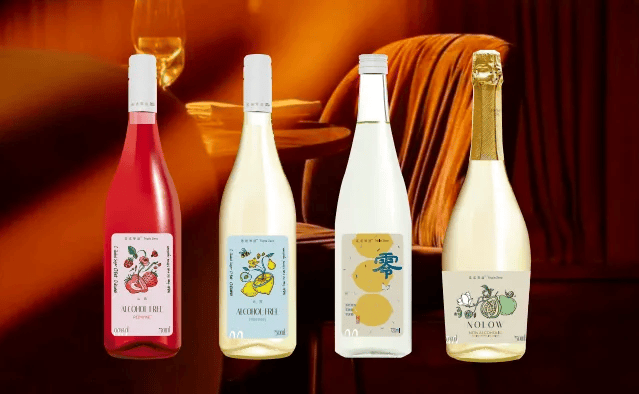
In the interview, No & Low founder Jack Zhang said that the decline in global alcohol consumption is already a clear trend, and demand for non-alcoholic products is real. But in China, the actual consumption occasions for such products have not yet truly been established, mainly for three reasons.
First, the real competitors of non-alcoholic wine are not traditional wines.
Non-alcoholic wine may sound as though it competes with alcoholic wine, but in actual sales, its main rivals are non-alcoholic drinks such as sugar-free tea beverages and Coca-Cola.
Jack observed that consumers often compare non-alcoholic wine with sugar-free tea drinks when making a purchase, and the latter has clear advantages in convenience and value for money. This aligns with Demei Li’s judgment: non-alcoholic wine is essentially competing with other beverages for consumers, rather than competing within the wine category itself. Once the competitive set changes, its pricing logic, channel strategy, and brand communication must all change accordingly.
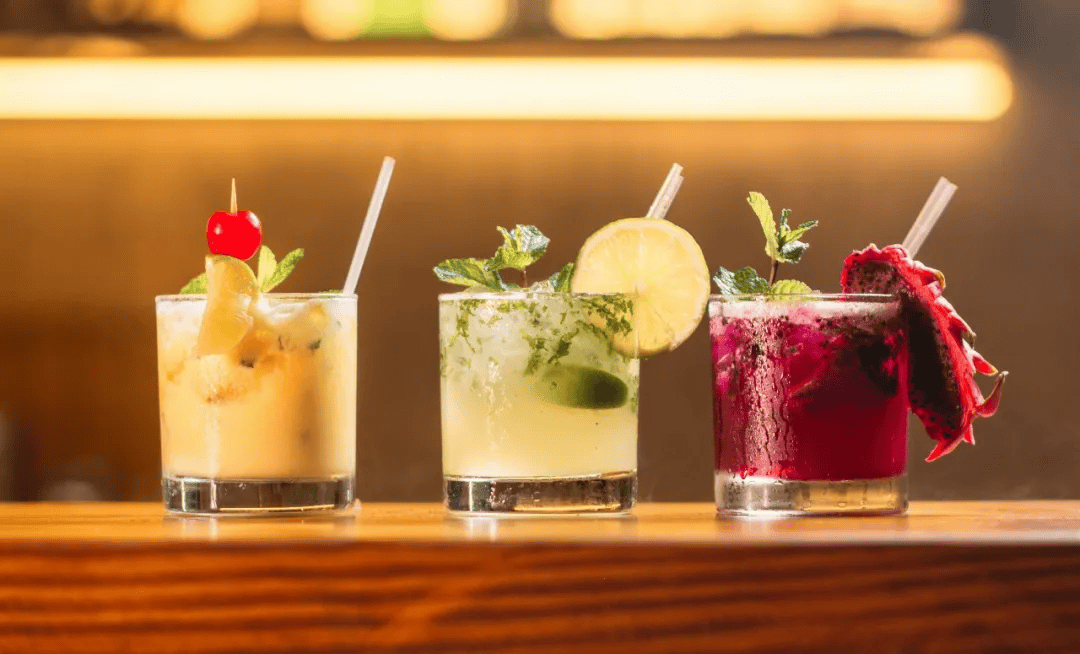
Second, the biggest obstacle is a simple question: “Why not just drink a soft drink?”
Jack admitted that the hardest challenge for non-alcoholic wine at present is consumers’ perception of drinking occasions. Many people reject it for a very simple reason: if it contains no alcohol, why not just drink an ordinary beverage instead? Compared with that question, flavor and price are not even the main obstacles.
This goes straight to the category’s core pain point: if non-alcoholic wine cannot offer a unique value distinct from existing beverages, why does the Chinese market need it at all?
Third, the potential occasions are broad, but none of them make it indispensable.
The consumption occasions for non-alcoholic wine reveal a clear contradiction. On the one hand, it is indeed suitable for various situations such as driving, working, and health management. On the other hand, there is no single occasion in which it is the only necessary choice.
Jack pointed out that traditional drinking venues such as bars have already proven unsuitable for promoting non-alcoholic products, because people go there precisely for the light buzz that alcohol provides. This means that non-alcoholic wine can only expand into broader and more scattered situations, such as post-workout consumption or as an everyday beverage substitute.
But the problem is that the more scattered those occasions become, the harder it is for the category to establish a clear core positioning of its own.
Once the Alcohol Is Gone, How Much of Wine’s Social Function Remains?
In China, alcoholic beverages often carry certain social functions and emotional value. Once alcohol is removed, how much of that can still remain?
Demei Li believes that alcoholic and non-alcoholic wine correspond to two different types of consumption occasions. They are not in conflict; rather, they can complement each other. Alcohol’s natural role in social interaction and relationship-building cannot be fully replaced by non-alcoholic products.
Shuai Peng, meanwhile, argued that non-alcoholic products are better understood as an expansion of consumption occasions rather than a replacement for traditional wine culture. The trend toward a “low-alcohol lifestyle” is real, reflecting changes in health awareness and consumer habits, and this will bring new demand and new products to the market.
At the same time, he emphasized that wine culture has never been built solely around alcohol content. It also includes grape growing, fermentation, aging, food pairing, history, and culture. Wine is wine not only because it comes from grapes, but because it has undergone a complete fermentation process, of which alcohol is an integral part. Once alcohol is removed, the product may still retain some grape-derived flavor, but it is no longer the same thing as traditional wine.
Put simply, in social situations where a mild buzz is part of the experience, traditional wine remains irreplaceable. In situations where people need to stay clear-headed, consumers have many ordinary beverages to choose from. Non-alcoholic wine sits awkwardly between the two: it cannot replace traditional drinking-table culture, nor has it yet established an independent cultural value of its own.

Different Futures ofNon-Alcoholic and Low-Alcohol Wine
Within the industry, there are also different views on the future of non-alcoholic and low-alcohol wine.
Demei Li believes that compared with fully non-alcoholic products (below 0.5% vol), low-alcohol wine is more likely to achieve stable growth. At present, the alcohol content of Chinese wine is generally around 15% vol, which is relatively high. Reducing alcohol by 1% to 3% vol through viticulture, harvest timing, or winemaking techniques is technically mature and stable, has limited impact on flavor, and remains cost-controllable. By contrast, fully dealcoholized wine has very limited room for short-term growth.
Shuai Peng suggested that non-alcoholic products may become an independent niche category, and that in certain scenarios there will indeed be clear market demand for them. But that depends on the products themselves becoming truly mature rather than merely riding on market hype. To achieve this, clearer standards and regulatory systems will be needed to avoid consumer confusion.
As a brand owner, Jack is optimistic. He believes that demand for both non-alcoholic and low-alcohol wine will certainly grow in the future, and that the key lies in identifying effective consumption occasions. Non-alcoholic wine will undoubtedly become a sizeable and mature market, but it will not be a market in which countless brands flourish side by side. Instead, brands will remain concentrated in the hands of a small number of leading manufacturers with technological and channel advantages.
Author’s Conclusion
At least in today’s Chinese market, non-alcoholic wine is still not a fully mature category. It is more like a product still searching for its position: it borrows the cultural shell of wine, yet must enter the beverage market to compete; it promotes health and sobriety as its key selling points, yet lacks a truly irreplaceable reason for consumption.
So perhaps the question is not whether non-alcoholic wine has a future, but rather: before that future truly arrives, who is willing to keep paying for it?
中文版本:
Want to know more about wine? Scan the QR code on the poster below, and feel free to subscribe and follow us!

Written & Edited | WINE
*This article is exclusively created by Wine Magazine and translated by AI
Personal WeChat ID of the Editor:
wine_magazine
© Copyright Notice: All rights to this content are
reserved by Wine Magazine.