

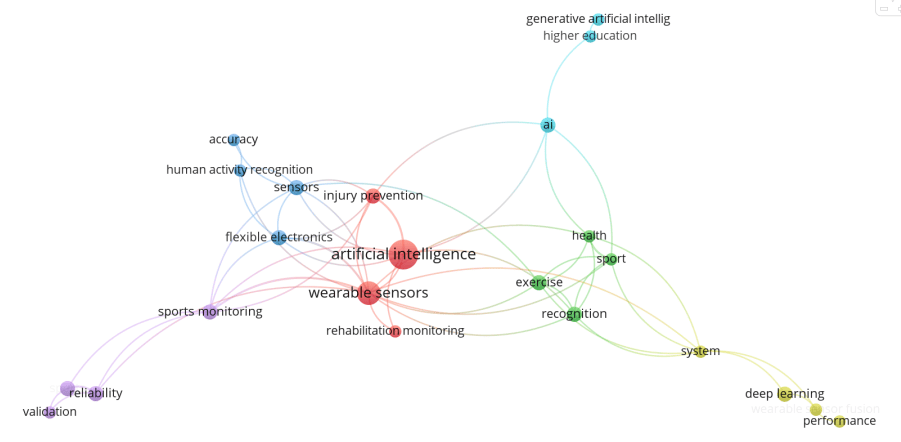
可放大查看
01
ALONAZI M, ABRO I, ABDELHAQ M, et al. Attention-Based Multimodal Framework for Athlete-Performance Analysis and Rehabilitation Monitoring Using Vision and Wearable Sensors [J]. BIOENGINEERING-BASEL, 2026, 13(7).
ABSTRACT :
Background: Advances in monitoring systems featuring wearable sensors, computer vision, and artificial intelligence (AI) have been increasingly used in sports science and rehabilitation practices as a means of movement pattern analysis, injury prevention, and training optimization. These technologies are becoming essential components of athlete-performance analysis and rehabilitation-monitoring systems designed to support biomechanical assessment, athlete development, and movement-quality evaluation. Athlete-performance analysis and rehabilitation monitoring increasingly rely on intelligent multimodal sensing systems capable of continuously evaluating movement quality, biomechanical patterns, training execution, and recovery progress. Human activity recognition (HAR) serves as a key enabling technology for these applications by providing automated assessment of human movement using wearable and vision-based sensing modalities. Therefore, the purpose of this study was to develop and evaluate an attention-based multimodal framework that integrates wearable inertial sensing and RGB video analysis for robust athlete-performance assessment and rehabilitation monitoring through accurate recognition of human movement patterns. Methods: Athlete-performance analysis and rehabilitation monitoring combining inertial sensor data and RGB-based visual information was introduced. Inertial signals were segmented with adaptive windowing, whereas silhouette refinement was performed to analyze motion structures from visual inputs in support of athlete-performance analysis and rehabilitation monitoring. Temporal, spatial, and motion features such as trajectory, orientation, and skeleton-based space-time representations were calculated from multimodal inputs. The proposed framework was designed to capture complex movement dynamics associated with rehabilitation exercises and sports-related motion patterns across heterogeneous sensing environments. Extracted features were then combined and optimized with a multimodal feature fusion approach, while the Ranger optimization algorithm was utilized during the process. An attention-based deep learning classifier was implemented to classify movement activities. Results: The results showed that the proposed framework reached accuracy scores of 88.40% and 87.96% on the VIDIMU dataset and the UTD-MHAD dataset respectively. Recognition performance across both inertial and vision-based modalities provided greater robustness than single-modality solutions. The integration of wearable sensing and computer vision modalities further improved the ability of the framework to analyze complex movement behaviors under varying execution conditions and environmental variations. Conclusion: The proposed multimodal framework provides a foundation for intelligent athlete-performance and rehabilitation-monitoring systems by integrating wearable sensing, computer vision, and attention-based artificial intelligence for robust movement analysis. The findings highlight its potential to support biomechanical assessment, movement-quality evaluation, training-performance monitoring, rehabilitation tracking, and injury-risk management in modern sports and healthcare environments.
02
BHAROT N, VERMA P, VIDYARTHI A, et al. Revolutionizing Wearable Sensor Data Analysis With an Automated Decision-Making Model for Enhanced Human Activity Detection [J]. IEEE JOURNAL OF BIOMEDICAL AND HEALTH INFORMATICS, 2026, 30(6): 5400-8.
ABSTRACT :
Human Activity Recognition (HAR) stands as a crucial technology, with applications ranging from healthcare monitoring to sports analytics. However, the traditional approach to HAR is often time-consuming and susceptible to human errors due to the high complexities involved in processing diverse sensor data. Recognizing the imperative for efficiency and accuracy in HAR systems, we propose the development of an Automated Decision-maker (ADM) system. This system serves to automate HAR pipelines, addressing the challenges posed by the huge sensor data. By harnessing the power of automation, ADM significantly streamlines the HAR process, reducing the time required for hyperparameter tuning and minimizing the risk of human errors. The results obtained from our proposed ADM system demonstrate notable improvements in HAR performance, showcasing achieved accuracy of 96.436% for UCI-HAR & 99.783% for PAMAP2 datasets. Moreover, ADM can be described as an innovative approach that contributes to the optimization of HAR systems while also establishing a foundation for building robust and reliable systems in complex environments.
03
CAO Y, LI F, ZHANG Y, et al. Prevalence and factors associated with adolescent idiopathic scoliosis in Shanghai, China: an artificial intelligence-assisted screening approach [J]. FRONTIERS IN PUBLIC HEALTH, 2026, 14.
ABSTRACT :
Objective: To investigate the prevalence of adolescent idiopathic scoliosis (AIS) and major modifiable factors associated with AIS among school students in Shanghai, China, and assess the feasibility and validated accuracy of AI-assisted 3D screening in school health management. Methods: A multistage stratified cluster sampling design was employed in this cross-sectional study, conducted from July 2024 to June 2025. A structured-light 3D back-scanning AI system was used to screen 5,026 students aged 9-15 years from six schools in five districts of Shanghai. Physical fitness tests and questionnaires were used to collect data on body morphology, posture, physical activity, and lifestyle. Standing full-spine radiography was used as the reference standard for AIS diagnosis, defined as Cobb angle >= 10 degrees. Because radiographic verification was performed for all screen-positive students but only for a random subset of screen-negative students, inverse probability weighting was applied to account for partial verification. Results Among the 5,026 screened students, 160 AIS cases were confirmed among 185 rescreen-positive students, and 2 additional AIS cases were identified among 300 randomly verified screen-negative students. The crude radiographically confirmed detection rate was 3.2% (162/5,026), and the IPW-adjusted estimated population prevalence was 3.8%. Thoracic curves and Cobb angles of 10 degrees- < 20 degrees were most common. Girls and middle school students had higher crude radiographic detection rates than boys and primary school students, respectively. Multivariable binary logistic regression identified female sex, improper sitting posture among girls, very low post-exercise fatigue among boys, and frequent one-sided exertion sports as factors associated with screening-detected AIS, whereas higher BMI, balanced walking posture, and satisfactory sleep quality showed protective associations. The AI-assisted structured-light screening workflow showed IPW-adjusted sensitivity of 0.832, specificity of 0.995, PPV of 0.865, NPV of 0.993, and overall accuracy of 0.989. Conclusion: AIS represents a non-negligible spinal health burden among school students in Shanghai. Most factors associated with AIS are modifiable. The AI-assisted structured-light screening workflow demonstrated acceptable diagnostic accuracy and promising feasibility for large-scale school-based health screening and management integration.
04
CHEN T, HUO G. MSBA-LSTM: a multi-scale bidirectional attention long short-term memory network for early risk prediction from multimodal wearable sensor time-series data in sports [J]. JOURNAL OF KING SAUD UNIVERSITY COMPUTER AND INFORMATION SCIENCES, 2026, 38(6).
ABSTRACT :
Multimodal wearable sensor time-series data present fundamental challenges for sequential risk prediction, including high dimensionality, heterogeneous sampling rates, and cross-scale temporal dependencies. Existing recurrent architectures are constrained by unidirectional information flow, single-scale temporal receptive fields, and insufficient dynamic weighting across heterogeneous sensor channels. To address these limitations, we propose the Multi-Scale Bidirectional Attention Long Short-Term Memory Network (MSBA-LSTM), a hybrid feature-engineered deep learning framework integrating three synergistic modules: (i) a stacked Bidirectional LSTM (BiLSTM) encoder that exploits both forward and backward temporal context at every timestep; (ii) a Multi-Head Self-Attention (MHSA) module with 8 parallel heads ( dk =32), residual connection, and Layer Normalization that dynamically focuses on semantically critical timesteps; and (iii) a multi-scale feature extraction strategy that captures biomechanical dynamics at a 0.5 s window (impact-level), time-domain and frequency-domain patterns at 1.0 s (movement-level), and physiological state at 5.0 s (fatigue-accumulation level), spanning three biomechanically meaningful temporal granularities. The model is trained with AdamW, cosine annealing scheduling, weighted binary cross-entropy, and SMOTE oversampling under stratified five-fold cross-validation, with additional subject-independent leave-one-subject-out (LOSO) validation to assess generalization to unseen athletes. On a self-collected dataset of 295 labeled sessions, MSBA-LSTM achieves 93.2% accuracy, 92.6% F1-score, and AUC-ROC of 0.967 under window-level cross-validation, and maintains an accuracy of 88.5% under the stricter LOSO protocol, outperforming standard LSTM by 5.9%, 6.8%, and 4.9 percentage points respectively, and surpassing the strongest deep-learning baseline (InceptionTime) by 3.4 percentage points in accuracy and 0.026 in AUC-ROC, with all pairwise improvements statistically significant ( p<0.001 , paired Wilcoxon signed-rank tests). Ablation studies validate the contribution of each module, and SHAP analysis provides feature-level attribution scores together with sport-category-wise importance variations that confirm the interpretability of the learned representations.
05
CHIANG Y, CHANG J, LEE C, et al. Wearable Sports Vision Training May Improve Selected Visuomotor Outcomes and Hitting Precision in Collegiate Badminton Athletes: A Randomized Controlled Trial [J]. DIAGNOSTICS, 2026, 16(12).
ABSTRACT :
Background: High-level badminton performance requires rapid perceptual processing, visuomotor coordination, and precise movement responses under continuously changing spatial conditions. Although wearable sports vision interventions have shown potential for enhancing perceptual-motor performance, evidence regarding their longitudinal effects and transfer to sport-specific outcomes remains limited. Trial design: A single-center, exploratory randomized controlled trial using a parallel-group structure. Simple randomization without blocking or stratification resulted in a final allocation ratio of 16:10 (approximately 1.6:1) between the training and control groups. Methods: Twenty-six collegiate badminton athletes aged 18-25 were randomized into a wearable sports vision training group (n = 16) or a control group (n = 10). The intervention group completed wearable sports vision training using Automatic Dual Rotational Risley Prisms (ADRRPs) for 15 min twice weekly over 4 weeks. Results: Baseline-adjusted ANCOVA demonstrated significant between-group effects for reaction time (p = 0.003) and target-zone accurate hits (p = 0.004), whereas binocular visual function outcomes did not show statistically significant between-group differences. No adverse events were reported. Conclusions: Four weeks of wearable sports vision training may be associated with improvements in selected visuomotor outcomes, particularly reaction performance and target-zone hitting accuracy, in collegiate badminton players. Larger trials are needed to evaluate long-term retention and broader sport-specific applicability.
06
FANG Q, LI Y, YIN Y. BehaviorDiff: a VAE-diffusion framework for AI-generated synthetic behavioral data in procrastination prediction for sports instruction [J]. BMC SPORTS SCIENCE MEDICINE AND REHABILITATION, 2026, 18(1).
ABSTRACT :
Accurate prediction of procrastination remains a critical challenge in sports instruction, where behavioral data are often limited and constrained by privacy concerns. This study investigates whether AI-generated synthetic data can approximate real-world behavioral patterns to predict procrastination under controlled experimental conditions. A three-stage framework was developed. First, a multimodal dataset (MAP-487) was constructed from 487 university athletes, integrating IMU-derived physiological signals, training adherence records, and psychological self-reports. Second, a hybrid Variational Autoencoder-Diffusion model (BehaviorDiff) was trained to generate synthetic sequences that preserve key statistical and temporal characteristics of the original data. Third, identical BiLSTM-Transformer models were trained and evaluated on real and synthetic datasets using consistent preprocessing, feature space, and train-test splits to ensure comparability. Results show that models trained on synthetic data achieve performance comparable to those trained on real data (accuracy: 0.94 vs 0.91), with the observed difference not reaching statistical significance (p = 0.072). Additional analyses, including correlation-based validation, indicate that synthetic data preserves essential behavioral relationships and predictive structure. The observed performance differences are interpreted as a consequence of smoothing and regularization effects introduced during data generation rather than an increase in informational content. The findings suggest that synthetic data can serve as a privacy-preserving and structurally consistent complement to real-world data for behavioral modeling in sports instruction. However, conclusions are limited to controlled experimental settings, and further validation across independent datasets is required to establish generalizability.
07
FERNANDEZ-DE-OSSO A, SáNCHEZ-TRIGO H. Artificial intelligence in padel performance assessment: A comparative study of result-based and computer vision-derived rankings [J]. INTERNATIONAL JOURNAL OF SPORTS SCIENCE & COACHING, 2026, 21(2): 941-9.
ABSTRACT :
Background: Accurate evaluation of non-professional padel players is essential for optimizing training and ensuring fair competition. Traditional result-based ranking systems, often reliant on self-assessment, can be biased. In contrast, AI-driven methods utilizing computer vision and deep learning promise objective, real-time performance evaluations.Methods: In this study, evaluation scores for 180 players were derived from three sources: a self-assessed result-based system (Playtomic), an AI-based system (AIball), and expert coach assessments, which served as the benchmark. AIball is a computer-vision-based evaluation system that automatically extracts key performance metrics. Data were collected from 50 matches across 9 clubs in Spain. Statistical analyses-including Pearson correlation, Intraclass Correlation Coefficient (ICC), Lin's Concordance Correlation Coefficient (CCC), paired t-tests, Bland-Altman analysis, and error metrics (mean squared error [MSE], root mean squared error [RMSE], and mean absolute error [MAE])-were employed to assess the reliability, agreement, and classification accuracy of the evaluation systems.Results: AIball demonstrated a strong positive correlation with coach evaluations (r = 0.7769; CCC = 0.7144) and yielded lower error metrics (MSE = 0.6689; RMSE = 0.8178; MAE = 0.6678) compared to Playtomic. Bland-Altman plots revealed that AIball's scores were more closely aligned with those of the experts, and pairwise comparisons showed a slightly higher classification accuracy for AIball (74.27%) relative to Playtomic (73.74%).Conclusion: The findings indicate that the AI-based evaluation system (AIball) offers a more reliable and objective assessment of non-professional padel players than traditional self-assessed methods. This approach has significant implications for enhancing training programs, standardizing player rankings, and promoting fairness in competitions.
08
HOU Y, ZHUO Y. From Passive Filling to Active Energy Dissipation: Evolution, Mechanisms, and Application Prospects of Impact Absorption and Damping Coatings in Modern Sports Protective Gear [J]. COATINGS, 2026, 16(4).
ABSTRACT :