
Shanghai Weekly Bulletin is an information service presented by the Foreign Affairs Office of Shanghai Municipal People’s Government in collaboration with Wolters Kluwer to foreign-funded enterprises, foreign-related institutions as well as people from overseas living in Shanghai. Covering major national and Shanghai foreign-related news, event information, policy Q&A and interpretations in the past week, it keeps you up-to-date with the latest foreign-related policies and developments in Shanghai.
If you have any comments or suggestions for Shanghai Weekly Bulletin, please feel free to send an email to [email protected]. Thank you!
1
Laws and Regulations
【National】
Law of the People’s Republic of China on Combating Cross-Border Corruption Promulgated and Takes Effect
Guiding Opinions on Accelerating the High-Quality Development of Shipping Insurance Issued
Five Draft Laws Open for Public Comment
【Shanghai】
Implementation Plan for Optimizing Shanghai’s Credit Repair System Issued
Shanghai’s 15th Five-Year Plan for Ensuring Drug Safety and Promoting the High-Quality Development of the Pharmaceutical Industry Issued
2
Q&A
An Official from the NDRC answers press questions on the National Basic List of Incentive Measures for Trustworthy Conduct (2026 Edition).
3
Expert Perspective
The Era of Specialized Legislation on Cross-Border Corruption Has Arrived: An Analysis of Ten Key Issues in the Law on Combating Cross-Border Corruption (Part I)
4
One Week in Shanghai
【Latest News】
2026 China Capital Market Academic Annual Conference Opens in Shanghai
China’s First Electronic Business License Application System for Bankrupt Enterprises Launched
Shanghai Municipal State-Owned Financial Enterprises Jointly Release 18 Measures to Support the Development of Shanghai’s Five Centers
Pudong Artificial Intelligence Ethics Service Center Officially Inaugurated
【Corporate Activities】
Jabil’s Project in Jiading Comprehensive Bonded Zone Officially Commences Production
Agreement Signed for Wärtsilä Qiyao’s Industrial Green Microgrid Project
Aptiv Invests in Jiading to Target Emerging Industries Including Robotics and Energy Storage
【Forums and Exhibitions】
Hongqiao Tech Week to Open on November 20
24th Conference on International Exchange of Professionals Held in Shanghai
【Training and Seminars】
Policy Briefing and Exchange Meeting for Foreign-Invested Enterprises on the 15th Five-Year Plan for the Development of the Intelligent Connected New Energy Vehicle Industry to Be Held on November 25
【Culture & Arts】
Cao Yu’s Classic Play “Sunrise” to Be Staged
Exhibition “Lim Tze Peng: A Singapore Story in Ink” Opens
Laws and Regulations
National
1.Law of the People’s Republic of China on Combating Cross-Border Corruption Promulgated and Takes Effect
[Keywords: Combating cross-border corruption]
On November 6, the Law of the People’s Republic of China on Combating Cross-Border Corruption was adopted at the 25th Session of the Standing Committee of the 14th National People’s Congress and took effect on the date of promulgation. The document specifies five categories of cross-border corrupt acts. It requires enterprises engaged in cross-border business operations to conduct business with integrity and in compliance with laws and regulations, and to urge and guide their overseas branches and subsidiaries to comply with the relevant laws and regulations of the countries or regions where they operate.
Source: China NPC Website
2.Guiding Opinions on Accelerating the High-Quality Development of Shipping Insurance Issued
[Keywords: Shipping insurance]
Recently, the National Financial Regulatory Administration (NFRA), the Ministry of Transport, and five other authorities jointly issued the Guiding Opinions on Accelerating the High-Quality Development of Shipping Insurance. The document sets out 17 measures in five areas, including enhancing insurance coverage in key sectors, strengthening the market system, and optimizing claims settlement services.
Source: NFRA
3.Five Draft Laws Open for Public Comment
[Keywords: Financial Law, Tax Collection and Administration Law, Criminal Procedure Law]
Recently, the National People’s Congress began soliciting public comments on five draft laws, including the Financial Law (Draft for Second Deliberation), the Criminal Procedure Law (Draft Amendment), and the Law on the Administration of Tax Collection (Draft Revision). The deadline for submitting comments is December 5, 2026.
Shanghai
1.Implementation Plan for Optimizing Shanghai’s Credit Repair System Issued
[Keywords: Credit repair]
Recently, the General Office of the Shanghai Municipal People’s Government issued the Implementation Plan for Optimizing Shanghai’s Credit Repair System. The document specifies improvements to the rules governing Shanghai’s one-stop credit repair service and sets out the scope, eligibility requirements, application materials, and processing procedures for credit repair. The document will take effect on December 1, 2026, and remain valid until November 30, 2031.
Source: Shanghai Municipal People’s Government
2.Shanghai’s 15th Five-Year Plan for Ensuring Drug Safety and Promoting the High-Quality Development of the Pharmaceutical Industry Issued
[Keywords: Drug safety, Pharmaceutical industry]
Recently, the Shanghai Municipal Food and Drug Safety Commission issued Shanghai’s 15th Five-Year Plan for Ensuring Drug Safety and Promoting the High-Quality Development of the Pharmaceutical Industry. The document sets out 20 indicators across six categories: regulatory inspections, regulatory sampling inspections, risk monitoring, quality and efficiency enhancement, innovation services, and capacity building.
Source: Shanghai Municipal Medical Products Administration
Q&A
An Official from the NDRC answers press questions on the National Basic List of Incentive Measures for Trustworthy Conduct (2026 Edition).
Q1
How does the Incentive List establish a joint incentive mechanism?
A1
The Incentive List uses a combination of administrative and social approaches to provide incentives to trustworthy entities recognized by government departments and relevant organizations, including individuals, legal persons, and unincorporated organizations. Focusing on “who provides incentives, who receives incentives, how incentives are provided, and how they are implemented”, it establishes a full-chain, closed-loop management system.
First, multiple incentive providers participate and work in coordination.The Incentive List was jointly compiled by 20 departments and organizations, with 10 enterprises in fields including aviation, finance, and the internet participating in its implementation. Based on their respective functions and responsibilities, all parties coordinate their efforts, creating a broad framework for joint incentives that features interdepartmental coordination, government-enterprise collaboration, and extensive social participation.
Second, eligible entities are broadly covered and identified according to standardized procedures. The Incentive List covers 25 categories of trustworthy entities, including individuals, enterprises and public institutions, self-employed individuals, and social organizations. It spans key fields such as market regulation, transport, taxation, customs, industry, and ecology and environment. All categories of entities are identified by the relevant departments in accordance with laws and regulations, ensuring that incentive resources are precisely allocated.
Third, the incentive measures are comprehensive, diverse, and precisely tailored. The Incentive List sets out more than 200 incentive measures, which are primarily divided into two categories. The first category consists of administrative incentives implemented by government departments in accordance with relevant provisions. These mainly include honors and commendations, publicity and promotion, additional points or higher ratings in public credit evaluations, application of the notification and commitment system, priority access to green channels for handling administrative matters, priority consideration in selections for exemplary entities and honors, and reduced frequency of random checks and inspections. The second category consists of social incentives provided by enterprises in the aviation, finance, and internet sectors. These mainly include more convenient air travel, facilitated financial services, and membership benefits on internet platforms. For each measure, the Incentive List specifies the eligible entities, the departments responsible for their identification, and the implementing entities, ensuring that the measures are actionable and the eligible entities verifiable.
Fourth, the implementation pathways and procedures form a closed loop and facilitate effective delivery.The Incentive List makes arrangements for refining incentive plans, publicly disclosing incentive rules, and strengthening the collection and sharing of credit information and identity verification. All related work is incorporated into an institutionalized management framework and is traceable and subject to oversight throughout the process, ensuring that the measures are implemented in a standardized and orderly manner.
Fifth, the scope of incentives is dynamically adjusted and expanded in an orderly manner.The Incentive List will be updated annually, with eligible entities and incentive measures adjusted promptly in response to changes in laws, regulations, and policy documents. More departments, organizations, and enterprises will also be encouraged to participate in joint incentives, further expanding the range of eligible entities and enriching the incentive measures so that trustworthy entities can enjoy more benefits and convenience.
Q2
What specific measures does the Incentive List introduce for joint incentives?
A2
The implementation of joint incentives makes “credit” a passport across departments and sectors. It provides a low-cost, sustainable approach to governance that facilitates the accelerated flow of factors and resources and safeguards the unified national market. Three main measures have been introduced to advance joint incentives.
First,the government and the market serve as dual drivers, with administrative tools and social measures provided in coordination. In the form of a unified national list, the Incentive List systematically integrates incentive measures for trustworthy entities that were previously dispersed across different departments and industries. Government departments lead by example while broadly mobilizing participation from society, creating a new model of joint incentives in which the government drives market participation and administrative action mobilizes social engagement. This shifts incentive measures from “separate identification and independent implementation” to “joint identification and integrated provision”.
Second, eligible entities are shared and mutually recognized across departments, while incentive measures are closely coordinated. For example, business entities with Grade A tax payment credit may receive additional credit points when being assessed for recognition as Grade A enterprises for law-abiding and trustworthy labor and social security practices. The General Administration of Customs provides one-on-one credit development support to trustworthy enterprises in fields such as information and communications, ecology and environment, highway and waterway engineering, taxation, and market regulation when they apply for Authorized Economic Operator (AEO) certification. AEO enterprises may also enjoy such facilitation measures as reduced inspection frequency and positive-list management from departments responsible for ecology and environment, market regulation, and transport. This significantly enhances the value of credit assets.
Third, “Credit Plus” application scenarios are used to deliver tangible results, making the benefits of trustworthiness perceptible and accessible. Application scenarios developed through years of exploration, such as “Credit-Based Easy Loans” and “Credit-Based Easy Travel”, are transformed into incentive measures for trustworthy entities, directing factors and resources toward these entities. This genuinely ensures that “the better the credit, the faster the service”, allowing trustworthy entities to tangibly enjoy the benefits brought by good credit.
Expert Perspective
The Era of Specialized Legislation on Cross-Border Corruption Has Arrived: An Analysis of Ten Key Issues in the Law on Combating Cross-Border Corruption (Part I)
By Liu Xinyu and Chen Runping [Zhong Lun Law Firm]
[Article Overview]
Against the backdrop of the formal implementation of the Law on Combating Cross-Border Corruption, this article analyzes issues including its scope of application, definitions of conduct, compliance obligations, legal liability, regulatory mechanisms, and international cooperation. This installment focuses on the law’s scope of application and examines the compliance requirements and risks faced by Chinese enterprises conducting overseas business, multinational enterprises operating in China, state-owned enterprises and their personnel assigned overseas, third-party institutions and relevant individuals, as well as financial institutions and designated non-financial institutions.
The article notes that the key factor in determining whether an enterprise is subject to the law is whether it actually engages in cross-border business operations, rather than whether it has established an overseas entity. The separate legal personality of an overseas subsidiary also does not automatically exempt its parent company from management and oversight obligations. In practice, corporate groups should incorporate overseas subsidiaries and joint ventures into a unified compliance management framework, improve third-party due diligence, financial oversight, and employee training, and strengthen the prevention and control of integrity risks involving key overseas positions, major funds, and major projects.
[Article Details]
The Law on Combating Cross-Border Corruption is China’s first specialized legislation on cross-border corruption. This article analyzes ten core issues concerning its scope of application, definitions of conduct, compliance obligations, legal liability, regulatory mechanisms, and international cooperation, providing a reference for compliance development by enterprises engaged in cross-border business operations.
On November 6, 2026, the Law of the People’s Republic of China on Combating Cross-Border Corruption (hereinafter referred to as the “Law on Combating Cross-Border Corruption” or the “Law”) was adopted by a vote at the 25th Session of the Standing Committee of the 14th National People’s Congress and took effect on the date of promulgation. As China’s first specialized legislation on combating cross-border corruption, the Law marks a new stage in the country’s governance of cross-border corruption, transitioning from fragmented regulation to specialized legislation.
Previously, China’s rules governing cross-border corruption were dispersed across multiple laws, including the Criminal Law, the Supervision Law, and the Law on International Criminal Judicial Assistance. They lacked uniform definitions of conduct, specialized jurisdictional rules, and systematic corporate compliance requirements. Through specialized legislation, the Law on Combating Cross-Border Corruption integrates these dispersed regulatory provisions into a complete institutional framework encompassing definitions of conduct, compliance obligations, legal liability, and international cooperation. It directly addresses long-standing challenges in cross-border corruption governance, including bribery by third parties in overseas project contracting, cross-border transfers of corrupt assets, and the flight abroad of persons involved in corruption.
I. Scope of Application: Which Entities Are Subject to the Law?
Based on the Law’s provisions defining cross-border corruption, corporate compliance obligations, and the responsibilities of relevant entities, the following five categories of market participants will be directly or indirectly subject to regulation:
Chinese enterprises “going global”.Domestic enterprises that establish branches or subsidiaries or conduct investment activities overseas are the primary entities subject to the Law’s compliance obligations. Industries with a high proportion of overseas business, including infrastructure construction, energy and mineral resources, ports and logistics, advanced manufacturing, new energy, pharmaceuticals and healthcare, and cross-border e-commerce, have historically been high-risk areas for cross-border corruption due to their lengthy business chains, numerous approval procedures, and extensive involvement of local third parties. They will also become key targets of regulatory oversight.
Multinational enterprises operating in China. Branches and subsidiaries established in China by overseas enterprises are also subject to compliance obligations. If their operations in China involve bribery, whether of domestic or foreign public officials, they may fall within the jurisdiction of the Law.
State-owned enterprises and their personnel assigned overseas. Managers of state-owned enterprises are subject to supervision. Chinese law applies without exception to duty-related violations and crimes that they commit overseas, including embezzlement, bribery, transfer of benefits, and abuse of power. The Law also imposes higher requirements on state-owned enterprises by requiring them to strengthen the prevention and control of integrity risks involving key overseas positions, major funds, and major projects, and to adopt enhanced, look-through controls such as directly appointing overseas finance officers, rotating personnel stationed overseas, and requiring recusal to avoid conflicts of interest.
Third-party institutions and relevant individuals. Third parties engaged by enterprises, such as agents, distributors, consultants, and intermediary institutions, are both subject to corporate compliance controls and may also be held jointly liable for acts of bribery.
Financial institutions and designated non-financial institutions.The Law requires the administrative department responsible for anti-money laundering to guide financial institutions and designated non-financial institutions in strengthening the monitoring of cross-border funds. Upon discovering suspicious transaction activities, the competent authorities may conduct investigations and refer relevant leads to the appropriate authorities in accordance with the law.
Two Noteworthy Details Regarding the Scope of Application
“Conducting investment activities” is sufficient to bring an enterprise within the scope of regulation, regardless of whether it has established an overseas entity. In practice, some enterprises believe that they are not subject to the Law if they “only make financial investments overseas without establishing an overseas team or operating entity.” This is a misinterpretation of the scope of the provisions. Compliance obligations are triggered by the factual circumstance of “engaging in cross-border business operations”, rather than by the existence of an overseas organizational structure.
The conduct of an overseas subsidiary cannot be insulated from risk on the grounds of its separate legal personality. The Law regulates branches and subsidiaries alongside domestic enterprises and imposes statutory management and oversight obligations on parent companies regarding the compliance systems, financial management, third-party due diligence, and employee training of their overseas entities. Under the framework of the Law, the defense that “the overseas subsidiary operates independently and the parent company was unaware” is unlikely to sever the parent company’s chain of obligations.
Practical note: Enterprises should determine whether they fall within the scope of the Law based on whether they engage in cross-border business operations, rather than whether they have established overseas entities. Corporate groups should establish a unified compliance management and control framework and integrate overseas subsidiaries and joint ventures into the parent company’s compliance management system. Controls must not be relaxed on the grounds of separate legal personality.
[To Be Continued]
One Week in Shanghai
Latest News
1.2026 China Capital Market Academic Annual Conference Opens in Shanghai
[Keywords: China Capital Market Academic Annual Conference]
The 2026 China Capital Market Academic Annual Conference opened in Shanghai on November 14. Themed “China’s Capital Market Amid Profound Global Changes: Deepening Reform and Opening Up and Pursuing High-Quality Development,” the conference features discussions and exchanges on topics including improving capital market functions, promoting high-standard two-way opening up of the capital market, and capital market development and security in the era of artificial intelligence.
2.China’s First Electronic Business License Application System for Bankrupt Enterprises Launched
[Keywords: Bankrupt enterprises, Electronic business licenses]
Recently, China’s first electronic business license application system for bankrupt enterprises was launched in Shanghai. After a company is ordered by the court to enter bankruptcy proceedings, relevant information about the bankruptcy case is transmitted to the market regulation authorities through the city’s big data center platform. The registration system then flags the enterprise, which will subsequently be subject to registration administration in accordance with bankruptcy law. Any registration application must be filed by the bankruptcy administrator on behalf of the bankrupt enterprise in accordance with law.
3.Shanghai Municipal State-Owned Financial Enterprises Jointly Release 18 Measures to Support the Development of Shanghai’s Five Centers
[Keywords: Five Centers]
Recently, a launch event for the joint action by Shanghai’s municipal state-owned financial enterprises to support the development of the “Five Centers” was held at the National Exhibition and Convention Center (Shanghai). At the event, the enterprises jointly released the Joint Action Initiative of Shanghai’s Municipal State-Owned Financial Enterprises to Support the Development of the “Five Centers”. Focusing on the development goals for the international economic, financial, trade, shipping, and science and technology innovation centers during the 15th Five-Year Plan period, the initiative sets out 18 actions. The enterprises have also formulated practical, distinctive, and innovative measures based on their respective core businesses and resource advantages.
4.Pudong Artificial Intelligence Ethics Service Center Officially Inaugurated
[Keywords: AI, Ethics]
Recently, an inauguration and service launch ceremony was held for the Pudong Artificial Intelligence Ethics Service Center. The center will officially begin providing enterprises with artificial intelligence science and technology ethics services and promote the coordinated development of science and technology ethics governance and industrial innovation.
Corporate Activities
1.Jabil’s Project in Jiading Comprehensive Bonded Zone Officially Commences Production
[Keywords: Jabil]
Recently, Jabil’s project in the Jiading Comprehensive Bonded Zone officially commenced production. In 2025, Jabil decided to expand production capacity at its Jiading facility based on its existing operations. Following thorough site inspections and certification by professional organizations, the company ultimately selected the Jiading Comprehensive Bonded Zone and currently leases 18,000 square meters of factory space there.
2.Agreement Signed for Wärtsilä Qiyao’s Industrial Green Microgrid Project
[Keywords: Wärtsilä Qiyao]
Recently, Wärtsilä Qiyao and Lingang Green formally signed an agreement to jointly develop the first industrial green microgrid project integrating diesel generation, energy storage, solar power, and charging in the Lingang Special Area. The project will support the development of Zero-Carbon Bay in the Lingang Special Area into a national-level zero-carbon industrial park.
3.Aptiv Invests in Jiading to Target Emerging Industries Including Robotics and Energy Storage
[Keywords: Aptiv]
Recently, several signing ceremonies for Aptiv’s strategic cooperation agreements were held at the International Automotive Culture Exhibition Area of the National Exhibition and Convention Center. Aptiv’s new connector systems project was officially established in Jiading District. The project will focus on emerging industries such as robotics, data center servers, and battery energy storage systems, expanding application scenarios for innovative technologies. Aptiv also entered into separate strategic partnerships with TARS and Shanghai Electric at the event.
Forums and Exhibitions
1.Hongqiao Tech Week to Open on November 20
[Keywords: Hongqiao Tech Week]
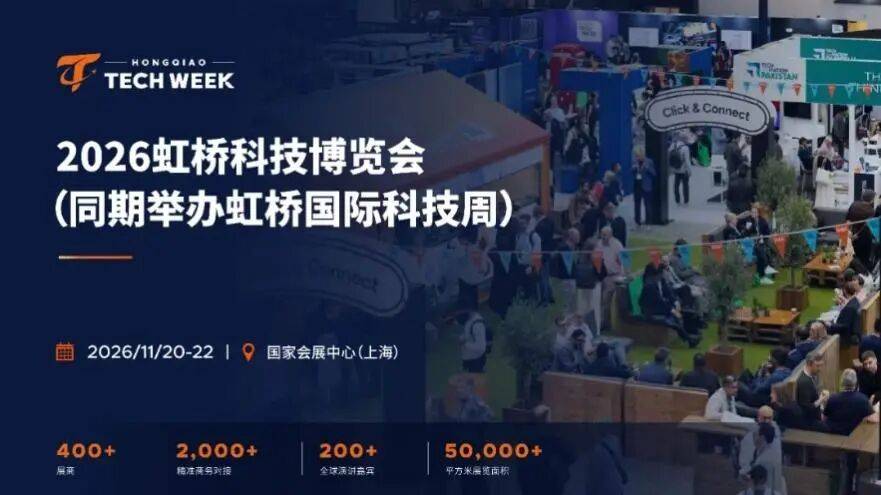
Hongqiao Tech Week will be held from November 20 to 22, 2026, at the National Exhibition and Convention Center (Shanghai). Themed “Global Tech Visions, Unlocking China’s Potential”, the event will cover approximately 50,000 square meters and is expected to attract more than 30,000 professional visitors. It will combine conferences, exhibitions, and interactive activities.
2.24th Conference on International Exchange of Professionals Held in Shanghai
[Keywords: Conference on International Exchange of Professionals]
Recently, the 24th Conference on International Exchange of Professionals was held at the Shanghai World Expo Center. Themed “Gathering Global Talent, Pursuing Win-Win Cooperation”, the Conference featured more than 160 talent exchange activities focusing on frontier fields and major issues of our time.
Training and Seminars
Policy Briefing and Exchange Meeting for Foreign-Invested Enterprises on the 15th Five-Year Plan for the Development of the Intelligent Connected New Energy Vehicle Industry to Be Held on November 25
[Keywords: Intelligent connected vehicles, New energy vehicles]
To help foreign-invested enterprises accurately understand the underlying rationale of the 15th Five-Year Plan for the Development of the Intelligent Connected New Energy Vehicle Industry and connect with Shanghai’s industrial layout, supporting policies, and project application channels, the Automotive Branch of the Shanghai Foreign Investment Association will hold the policy briefing and exchange meeting on November 25. Registration closes at 4:00 p.m. on November 19.
Culture & Arts
1.Cao Yu’s Classic Play “Sunrise” to Be Staged
[Keyword: Play]

Sunrise, one of the plays in the “Cao Yu Trilogy”, will be staged at the Poly Shanghai City Theatre on November 21.
2.Exhibition “Lim Tze Peng: A Singapore Story in Ink” Opens
[Keywords: Lim Tze Peng, A Singapore Story in Ink]
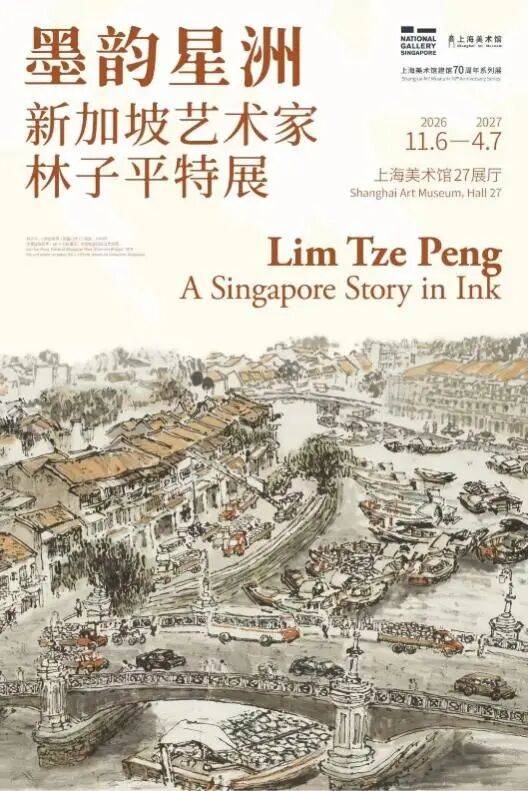
Recently, “Lim Tze Peng: A Singapore Story in Ink”, a special exhibition featuring renowned Singaporean artist Lim Tze Peng, opened at the Shanghai Art Museum. The exhibition presents 58 artworks by Lim and related archival materials, showcasing his depictions of Singapore and Southeast Asia, as well as his distinctive “hutuzi” works.