
In the fall of 2017, Apple launched the landmark iPhone X. As the commemorative model marking the iPhone’s 10th anniversary, the iPhone X held special significance for Apple. It was Apple’s first smartphone to adopt a full-screen design, completing the iPhone’s comprehensive transition from a physical Home button to full-screen gesture-based interaction. Even today—though each new iPhone generation introduces subtle aesthetic refinements—the overall design language remains fundamentally rooted in that of the iPhone X.
Time flies: 2027 marks the iPhone’s 20th anniversary—a pivotal milestone. Multiple credible sources indicate that Apple’s 20th-anniversary iPhone is imminent. This new device will feature bolder design choices and incorporate more advanced technologies. Yet its role may subtly differ from that of the original iPhone X.
Quad-Curved Glass, True Full-Screen Display, Silicon-Anode Battery: Apple Aims Big
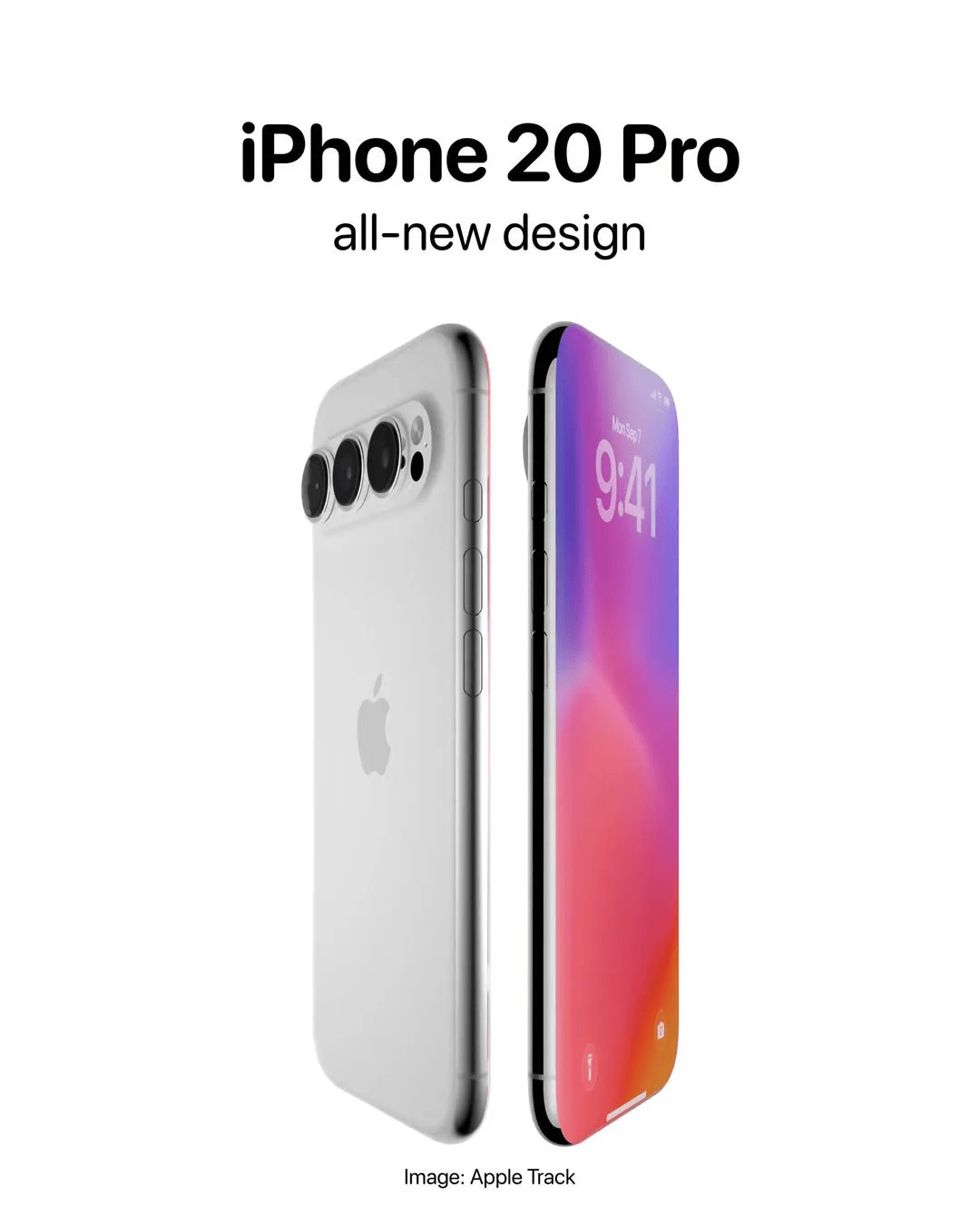
Recently, the well-known Apple rumor site MacRumors compiled and synthesized numerous reliable leaks. Based on this information, we can outline the likely specifications of the iPhone’s 20th-anniversary edition. Regarding naming, the device is highly likely to be called the “iPhone 20 Pro”—a logical parallel to the original iPhone X.
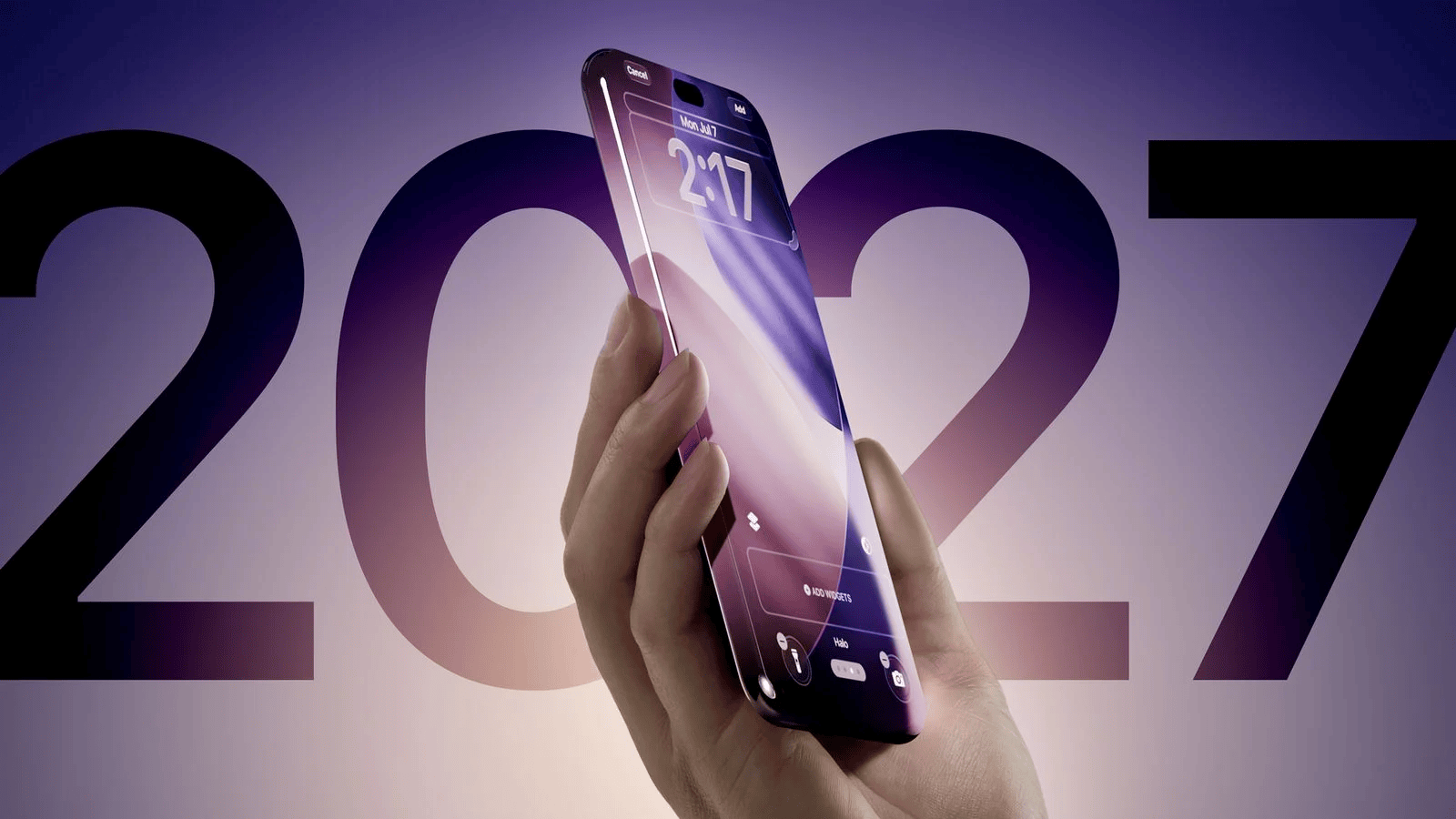
Exterior design-wise, the iPhone 20 Pro will adopt quad-curved glass, with the display curving along all four edges—significantly minimizing the visual prominence of the frame.Simultaneously, it will push full-screen design further, increasing screen-to-body ratio. Achieving a “true full-screen” display naturally requires eliminating the front-facing camera cutout; accordingly, the iPhone 20 Pro is very likely to adopt under-display camera (UDC) technology—the same solution used in the iPhone Duo.
The iPhone 20 Pro won’t just achieve a true full-screen display—it will also pursue a “hole-free” design.All physical buttons—including volume keys, power button, and camera shutter button—will be replaced by solid-state actuators.Solid-state buttons have appeared previously on iPhones: starting with the iPhone 7, even devices retaining a physical Home button adopted this technology. Specifically, these buttons contain no moving mechanical parts and do not physically depress; instead, they deliver tactile feedback via haptic motor vibrations upon press.
(Source: MacRumors)
Additionally, LeiTech (ID: leitech) speculates that the iPhone 20 Pro will almost certainly adopt an eSIM-only configuration, eliminating the physical SIM tray—an approach already implemented in both the iPhone Air and iPhone Duo, posing no significant technical hurdles. Speaker grilles could likewise be removed using screen-based audio technologies (e.g., similar to display-integrated speaker systems), though this may impact outward audio quality. The sole remaining challenge lies in the charging port: achieving a fully hole-free design would likely necessitate magnetic charging—but at the cost of backward compatibility. How Apple ultimately balances these trade-offs remains to be seen.
In terms of core specifications, the iPhone 20 Pro will feature the A21 Pro chip, higher-tier memory, and a next-generation in-house modem—standard upgrades, in essence. The truly noteworthy innovation here is the silicon-anode battery. Apple’s battery technology has seen little substantive advancement over the years. While Android OEMs have widely adopted silicon-carbon anode solutions to boost capacity, iPhone battery capacities have remained largely stagnant.
Silicon-anode batteries share many technical similarities with silicon-carbon anode approaches—both rely heavily on incorporating silicon into the anode to increase energy density. However, the silicon-anode strategy is more aggressive, significantly raising the silicon content to deliver a more pronounced leap in volumetric and gravimetric energy density.
Yet pure-silicon batteries still struggle to overcome issues related to volume expansion during charge/discharge cycles. Thus, the iPhone 20 Pro’s battery will most likely use a hybrid silicon-carbon anode approach—not a pure-silicon solution. Regardless, the iPhone 20 Pro’s battery capacity is expected to see a qualitative improvement, which alone is reason enough for excitement.
Apple’s “Comprehensive Upgrade” Is Just Reheating Android’s Leftovers
Based on current leaks, the iPhone 20’s most prominent and attention-grabbing changes remain centered on exterior design. Yet neither the “true full-screen” display nor quad-curved glass represents particularly novel innovation—at least, Android OEMs have explored both concepts extensively.
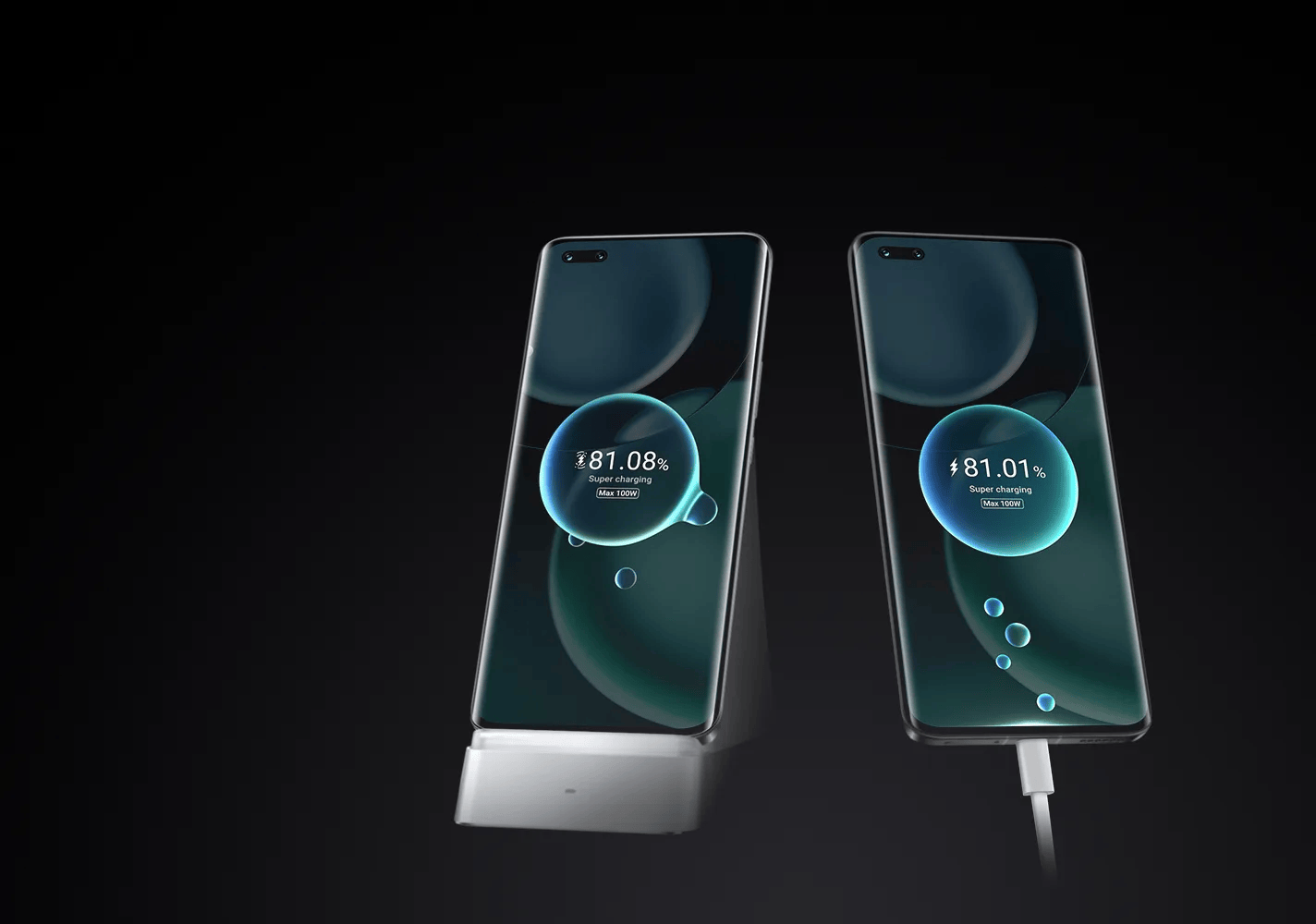
Samsung introduced curved displays as early as 2013 with the Galaxy Round. Its 2015 Galaxy S6 Edge featured dual-curved glass. In 2016, Honor launched its first-generation Magic smartphone—boldly adopting an “octo-curved” design, meaning both front and back surfaces featured four curves each. Since then, Huawei, Xiaomi, OPPO, and vivo have all experimented with similar designs.
The advantages of curved displays include stronger visual impact and a more comfortable, rounded grip. But drawbacks are equally apparent: reduced structural reliability and lower drop resistance; increased risk of accidental touches; and greater difficulty applying protective screen films.
(Source: Honor)
In recent years, mainstream smartphone design has trended toward practicality, with flat-panel displays becoming dominant. That said, many flagship models retain quad-curved glass—but typically in the form of subtle, low-curvature implementations. These strike a balance: the central display area delivers near-flat-screen usability, while edge-swiping gestures and visual aesthetics retain the smooth, rounded feel of curved displays.
As for under-display cameras—the hallmark of true full-screen designs—most major Android brands have already experimented with them. Among them, ZTE—and its sub-brand Nubia—has been the most persistent advocate. UDC technology hasn’t gone mainstream primarily because core technical challenges remain unresolved: image quality continues to lag behind conventional front cameras, and screen display performance in the camera region suffers noticeable degradation.
As evidenced by the iPhone Duo, Apple itself hasn’t yet solved these issues. Therefore, the UDC implementation in the iPhone 20 Pro—arriving one year later—is unlikely to be flawless.
Overall, genuinely groundbreaking innovations or compelling new features on the iPhone 20 Pro are scarce. Fundamentally, Apple appears to be reassembling and refining design concepts previously trialed—and subsequently abandoned—by Android OEMs. A similar precedent is Meizu’s “Zero,” an unproduced, hole-free smartphone announced but never mass-manufactured.
Will the 20th-Anniversary iPhone Spark a “Renaissance”?
Frankly speaking, today’s smartphone landscape bears little resemblance to the environment in which the iPhone X debuted in 2017. Back then, the iPhone X single-handedly bridged the gap from physical Home buttons to full-screen gesture navigation—a foundational shift in interaction paradigms. Since then, virtually all iPhone models have adopted full-screen designs.
Yet according to LeiTech (ID: leitech), the iPhone 20 Pro’s quad-curved glass, hole-free construction, and under-display camera represent mostly incremental, surface-level refinements and integrations. Today’s Apple operates under strict profit considerations and tiered product strategies. Such ambitious, low-yield, and internally complex engineering solutions are likely reserved exclusively for commemorative editions—designed more to showcase technical prowess than to define mainstream direction.It’s highly improbable that these features—like the original notch—will rapidly trickle down to standard models and reshape the entire iPhone family’s design language for years to come.
That said, even if many of the iPhone 20 Pro’s headline features originate from Android’s playbook, we must not underestimate Apple’s unparalleled ability to drive mainstream adoption. The consumer electronics industry follows an unwritten rule: Apple may not pioneer a given cutting-edge technology—but once Apple adopts it, mass-market acceptance accelerates dramatically, often directly compelling upstream suppliers to accelerate R&D and production ramp-up.
(Source: Apple Track)
Take the recently launched iPhone Duo, for example. Its form factor appears utterly ordinary within the Android ecosystem, and the “wide-fold” concept was pioneered by Android OEMs. Moreover, the iPhone Duo omits a telephoto lens, struggles with weight control, and has suffered hinge-related reliability issues. Yet despite these shortcomings—and thanks solely to its status as Apple’s first foldable—the iPhone Duo achieved strong initial sales, successfully carving out a slice of the foldable market previously dominated by Android.
More critically, the smartphone industry today finds itself in an awkward phase of innovation fatigue. Reviewing flagship slab-style smartphones released over the past two years, manufacturers largely stick to safe, incremental improvements: subtle curvature, right-angled frames, and minor rearrangements of rear camera modules. Visually, differentiation has become increasingly difficult.
Moreover, rising storage costs have pushed smartphone prices upward across the board, contributing to declining overall shipment volumes. According to IDC data, domestic smartphone shipments fell 15.2% year-on-year in Q3 2024, while global shipments dropped 22% YoY. Consumers’ upgrade intent is weakening in both domestic and global markets.
Unsurprisingly, once the iPhone 20 Pro launches and ignites widespread discussion, Android OEMs will inevitably seize this momentum—sparking a wave of smartphone “renaissance.”Technologies and features that briefly gained traction before fading into obscurity—such as truly hole-free phones, octo-curved glass, and true full-screen displays—are highly likely to be dusted off from R&D vaults and repackaged as premium selling points. With few remaining levers to effectively stimulate sales growth, manufacturers have little choice but to revisit such “leftover” innovations.
In today’s shrinking, saturated market, Android OEMs rebranding yesterday’s “cold leftovers” with fresh, geek-chic packaging—and leveraging Apple’s announcement to compete head-to-head—may well be the iPhone 20 Pro’s most significant industry-wide impact.
Of course, we view this development positively. For a long time, smartphone makers favored “jack-of-all-trades” products: balanced specs, conservative designs, and few flaws—but also prone to homogenization. If Apple’s stimulus helps invigorate the broader market with more distinctive, imaginative devices—and gives everyday consumers richer, more diverse choices—then that’s undoubtedly a welcome outcome.